Begin with what a visitor can infer
You enter an office after its occupant has left. A chair is pulled away from the desk; light reaches only one corner; a sound continues behind the wall. None of these details tells a complete story, but together they suggest an event and invite an explanation. The room is doing narrative work through relationships rather than through a written synopsis.
This does not mean that every furnished interior is immersive theatre. The difference lies in how a performance organises attention and gives visitors a role in making connections. A room may be evidence, an obstacle, a refuge or a place of encounter. Its narrative function should be more specific than “atmospheric.”
Josephine Machon’s Immersive Theatres: Intimacy and Immediacy in Contemporary Performance and Gareth White’s Audience Participation in Theatre: Aesthetics of the Invitation provide different critical routes into this territory. Neither supplies a universal floor plan. They help frame questions about bodily encounter, participation and the terms on which an audience is invited into an experience.
A threshold edits the view
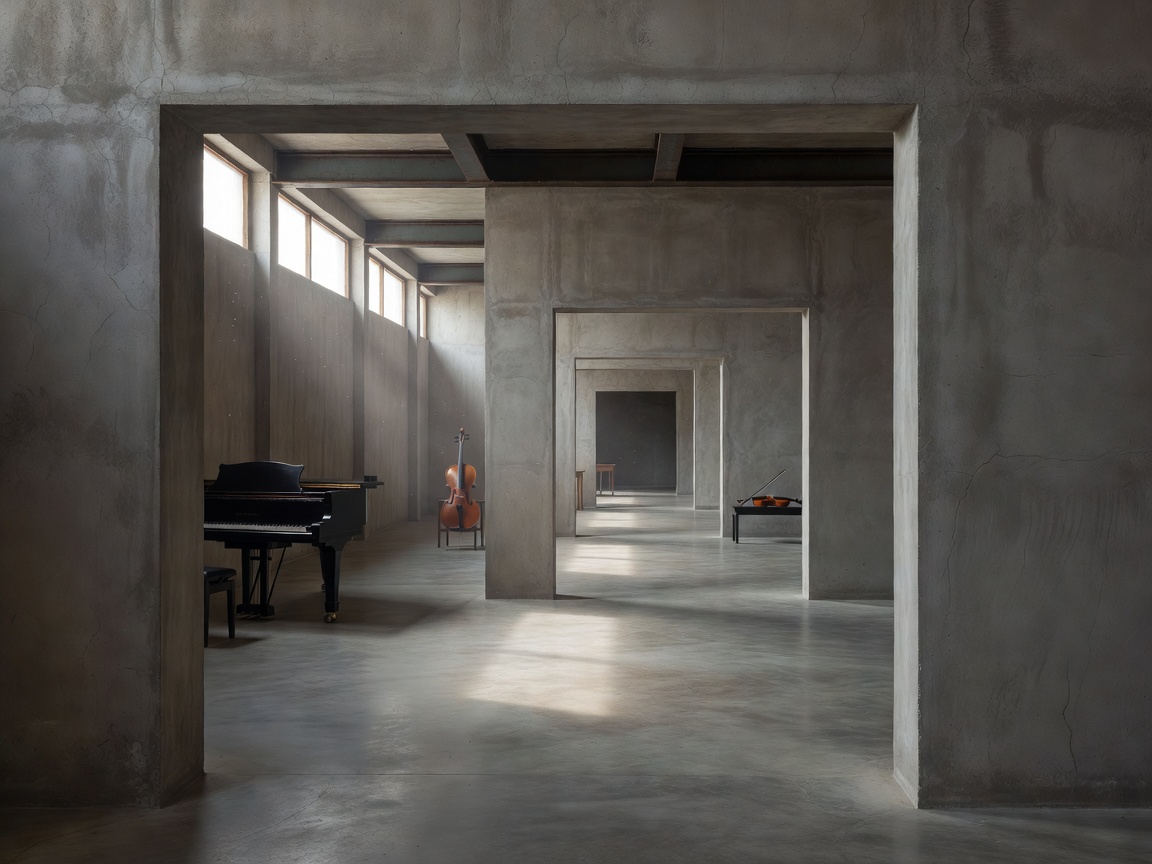
From a corridor, you may see only a table and a hand. Entering the room reveals who is sitting opposite. The doorway acts like an edit, but the timing belongs partly to your own movement.
Change the doorway’s position and the revelation changes. A deep opening can hold someone at the edge; a broad entrance can expose the whole scene before they commit. These are spatial decisions with dramaturgical consequences.
Let fragments survive a different order
In a freely explored environment, you cannot assume that every visitor receives information in the same sequence. A room that only makes sense after a specific scene may remain opaque to much of the audience. Designers can address this through overlapping clues, repeated motifs and encounters that make sense locally while contributing to a larger pattern.
Punchdrunk’s Sleep No More is a documented example of audiences exploring a densely constructed environment while encountering performance. The general lesson we draw is not that every project should copy its format. It is that distributed storytelling needs meaningful fragments: a visitor can miss a scene without the entire experience becoming unintelligible.
Redundancy need not feel repetitive. A musical phrase in one room, an object in another and a repeated action elsewhere can establish a connection through different senses. Essential practical information, however, should not become a puzzle. Instructions about consent, restricted spaces and exits need direct communication.
The complete reveal
A broad opening makes a scene immediately legible and allows several viewpoints. It may also remove the suspense of approaching gradually.
The partial glimpse
A narrow view can reward curiosity. Without alternative viewing positions, it can also turn a dramatic detail into a physical queue.
Listen beyond the wall
Sound can draw people toward a room before they see it. It can also leak into a scene that needs quiet, reveal a surprise too soon or make speech difficult to understand. Acoustic design is therefore part of narrative architecture, not a technical layer applied after the story is complete.
Separate intentional sound cues from unavoidable building noise. A ventilation system, a closing fire door and a staff conversation may all compete with a whispered scene. Test the experience with the building operating as it will during a performance. A silent rehearsal in an empty room cannot reveal the whole acoustic problem.
Make the return visit matter
A powerful room can change without being rebuilt. On your second visit, a missing object, an altered light or a newly understood relationship may recast everything you noticed earlier. A return route gives this transformation a spatial structure: the building becomes something you remember rather than simply pass through.
dreamthinkspeak’s installations and promenade works are useful references for the meeting of moving audiences, architecture and composed images. Their documented projects are distinct artistic works, not evidence that a particular technique will succeed everywhere. Our interpretation is that narrative can emerge from the interval between spaces as strongly as from an individual scene.
Before adding another room, ask what the existing sequence already communicates. If a space contributes neither a choice, a discovery nor a necessary pause, it may be extending the journey without deepening it. An audience’s time and physical effort are design materials too.
Reading and references
- Josephine Machon, Immersive Theatres: Intimacy and Immediacy in Contemporary Performance.
- Gareth White, Audience Participation in Theatre: Aesthetics of the Invitation.
- Punchdrunk — production archive and practice.
- dreamthinkspeak — project documentation.
A compelling room still needs a way out
Read how access, consent and everyday operations support the fictional world.
Follow the supporting route →